Pedagogical concept

What we do, why we do it.

Our concept follows Reggio Emilia (Loris Malaguzzi) and the movement pedagogy of Elfriede Hengstenberg. Both are well-documented, neither is esoteric — and both demand considerably more preparation than frontal teaching.

Child working with wooden learning material
i.

Reggio-style free work

Mornings are self-directed. Children choose from prepared materials — often wood and natural items — and decide whether to work alone, in pairs, or in small groups. Teachers observe, document, and run targeted small-group lessons where needed.

  • Prepared learning environment with materials in open shelves — maths, language, natural science
  • Daily written observation per child („learning diary")
  • Small-group lessons (max. 6 children) when material requires
  • Half-yearly progress conversations with parents based on documentation — no grades
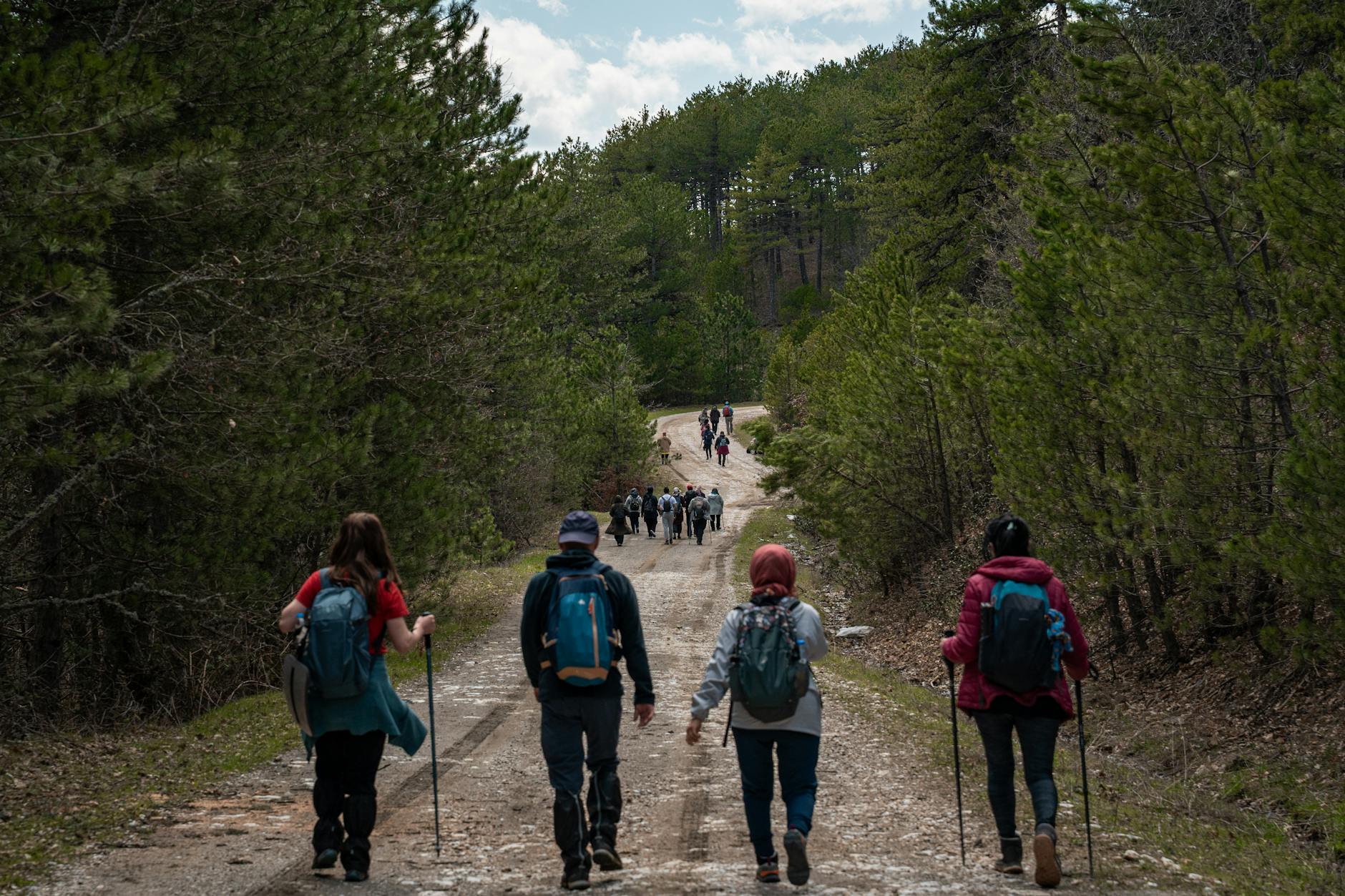
Children walking in the forest
ii.

Forest & farmyard time

Three hours outside daily — not as „PE", but as integral to learning. Natural science is observed instead of read about, mathematics practised with sticks and stones, writing done at the yard table under trees, whenever possible.

  • Own school forest (4 ha) behind the farmstead, with fixed group spots
  • In any weather — proper clothing on site, drying room for wet items
  • Weekly full forest day (one full school day outside, rotating per learning group)
  • Animal care at the farmyard — chickens, sheep, two donkeys — as a fixed duty
Classroom with wooden furniture
iii.

Mixed-age learning groups

Four learning groups with animal names — chosen so children take responsibility for „their" animals. Mixing across two year-groups has a concrete effect: older children explain to younger, and measurably get better at their own subjects.

  • Hedgehogs · year 1–2 · 12 children · lead Theresa Musterfrau
  • Squirrels · year 3–4 · 12 children · lead Hannah Musterfrau
  • Foxes · year 5–6 (added 2022) · 12 children · Andreas Mustermann
  • Bears · all years, biweekly project sessions
Children in the workshop
iv.

Workshop & craft

One full half-day per week. Four workshops per school year: carpentry, garden / beekeeping, animal care, kitchen. Every child rotates through all four in one school year, led by staff who actually know the craft.

  • Carpentry workshop with hand tools — from bird-houses to parent gifts
  • School garden 1,200 m² with raised beds, berry hedge, beekeeping (three hives)
  • Animal care with responsibility for feeding, stalls, free-range
  • Kitchen — shared lunch is co-cooked, each group once a month
What we are not

Three clarifications we care about.

Not a Waldorf school

Our pedagogy is evidence-based and follows Reggio and Hengstenberg traditions. No anthroposophy, no eurythmy, no doctrinaire spiritual-science teaching.

A real school

State-approved supplementary school per Art. 102 BayEUG. Our children meet compulsory schooling, follow official educational standards, and transition into mainstream schools after year 4 — without breaks.

Not a play room

We do teach — sometimes frontally, in small groups, with clear learning goals. Freedom here means: children choose what to start with — not whether they learn to read.

Best understood on site

Pedagogy reads best when you visit.

Come to an open afternoon or the open day. We show you the farmstead, the learning groups, the animals — and you can speak to parents whose children attend.

Request an appointment